

The old saying a picture paints a thousand words is applicable when adding content to your website. A proven statistic is that blogs with images, receive 94 percent more views compared to those without images. When presented images and text on a website, the reader’s eyes are naturally drawn towards the image. These days, it is almost effortless to capture images or add images to your website content. In this article, I will give you 4 tips on adding great images to increase traffic and boost the quality of your content.
1. Relevance
The first thing you need to ensure when deciding an image for your content is whether it matches the text. If you have an image that isn’t relevant to the text then it could confuse the reader into thinking you are writing about something else. The article shouldn’t be a puzzle for them to piece together. If the article becomes too confusing the chances are they will abandon reading it.
2. Background Removal
So, you have found the your chosen image. Then the second task to do is to remove the excess background of the image. For example, if you are writing about a product you want to draw the product to the reader’s eyes rather than its background. It 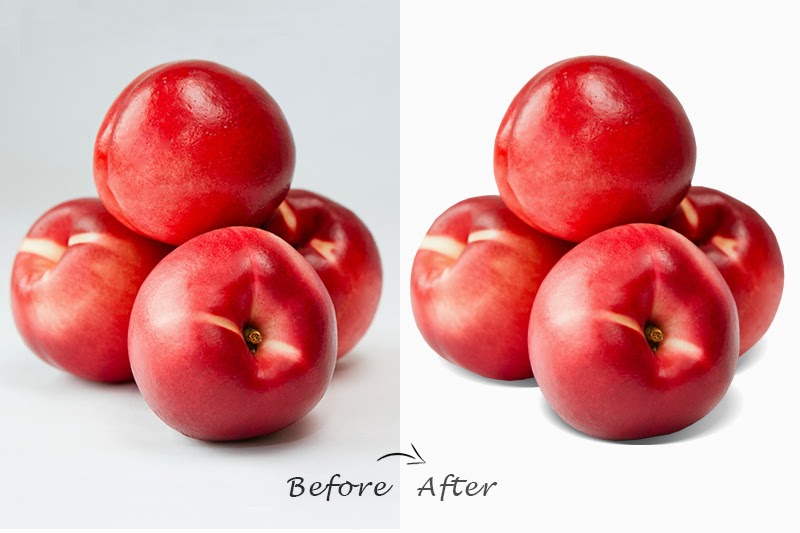 can also make the file size to be smaller, but I will get to that later. There are a variety of benefits of removing the excess background of your image, not least that it allows to make the photos look a lot more revealing and attractive. More complex benefits of removing excess background and adding to a typical white background is that you may want to use the Colour Psychology, a powerful way of communicating. The right colour pallet can help to sell your message not only in your photograph but in the whole content as well.
3. Optimising
Not optimising images properly results in extremely slow loading time. When publishing your images online, you must compress it. When uploading an image to the web you want to find the right balance between the file size and the quality. The higher your quality, the better your image will look, but the larger the file size will be. Huge image files on your site will slow down the loading of you page, this can affect your users experience and, after a period your search engine ranking. Most image editng software will have the functionality to optimise images at the point they are saved
4. Naming
Finally, when saving your image be sure to give it a correct file name. Most people just set the image as “Photo1.jpg” or “Untitled.” If you just take a minute to save your image as the correct name referencing its subject matter this too will improve your search engine optimisation. This is because the file name becomes part of the images URL, therefore a relevant name will make your URLs easier to navigate and interpret. All these steps will make our images look a lot sharper. Also, allowing your website to load faster and ultimately benefit your SEO.

 Some things don’t change. At its heart, marketing is, and always was, about effective communication and engagement with customers and markets. Get a compelling proposition to a relevant market and people will buy! What has changed dramatically is the ever-increasing range of options for marketing communication – particularly online. Here are some of the more common ones… [su_row] [su_column size=”2/5″ center=”yes”]
 Talking about a “Social Media” campaign is a little like saying you are planning an “Advertising” or “Direct Marketing” campaign (sorry, showing my age there!). In reality, the term is very broad, and so the first thing to do is to decide what you mean by “Social Media”, and which tools are actually relevant to your business. My first 2 tips will help to make a decision on this. For the purpose of this article, I will be focusing on the 3 main social media platforms namely Facebook, Twitter and LinkedIn .
 Yesterday I received an email from a company inviting me to “Check out their new website!”. The email went on to sing its praises and highlight all its cool features. But the question I want to ask, was this the beginning or the end of the process. A process that usually starts with the phrase:
 Doing business is about engaging with people. A company does not do business with another company, people do business with people. Doing good business is about building a relationship between supplier and customer where the customer has confidence in the supplier and the supplier provides the products/services that deliver real value and benefit to the customer. Building relationships takes time. Whether it is a few minutes or several months, or even years, the development of the supplier/customer relationship is a process, not an event.
 Why is it so popular to try to make a success of NOW – with no thought for the future? Maybe I’m just showing my age but I think Over Promise, Under Deliver is the scourge of the 21st Century In business, this is often true of the sales approach. The push to get the deal now means people can almost feel bullied into business and if the aim of the supplier is always to drive on for the next customer, the last customer can feel let down. As a result, we get a self-fulfilling prophecy. The customer can feel ignored and let down so next time they look for a different supplier. The last supplier loses the business so they are constantly looking for the next new customer – and so the cycle repeats! If you believe your customers aren’t going to stick with you, you will always be focussed on finding the next customer – yet doing this makes it even more likely they won’t stick with you! It’s scary and whether you are in business (or politics!), if you over promise and under deliver, keeping going will be tough. This may be what gets the headlines but underneath, in the real world that doesn’t tend to make the headlines, good business relationships do exist. They are typically based on the trust, confidence and respect that is earned when someone aims to Under Promise and Over Deliver – they deliver real benefit and make things better for everyone. A powerful win:win. If you are after a quick buck then join the rat race and keep chasing the next new customer but without delivering real, sustained benefit, it is hard to grow true business value. Good, long-term business needs trust, confidence and respect. It’s not about being perfect, it is about relationships and how you respond when maybe things don’t quite go according to plan. Poor service is never good. I recently found that my energy supplier had let me fall onto their standard tariff which was around 15% more expensive. I’m sure they sent me a letter but I missed it. Then there was nothing for nearly a year until I happened to pick up on it. I don’t want to spend my life checking on suppliers. They know they have a cheaper deal but don’t make any effort to tell me. They should have communicated regularly (using some of the extra we were paying them!) They know they could deliver better value but made no effort to make it happen. Needless to say, we have now switched! I believe in the principle of Under Promise, Over Deliver. We all have the choice – but I know which I prefer!